The Silent Cost of Convenience: Why Over-Reliance on AI Is a Dangerous Threat to Human Potential
Artificial intelligence can accelerate our work, but it cannot preserve our thinking for us. As AI takes on more cognitive tasks, the question is no longer what machines can do ? but what happens when humans stop doing the thinking themselves.
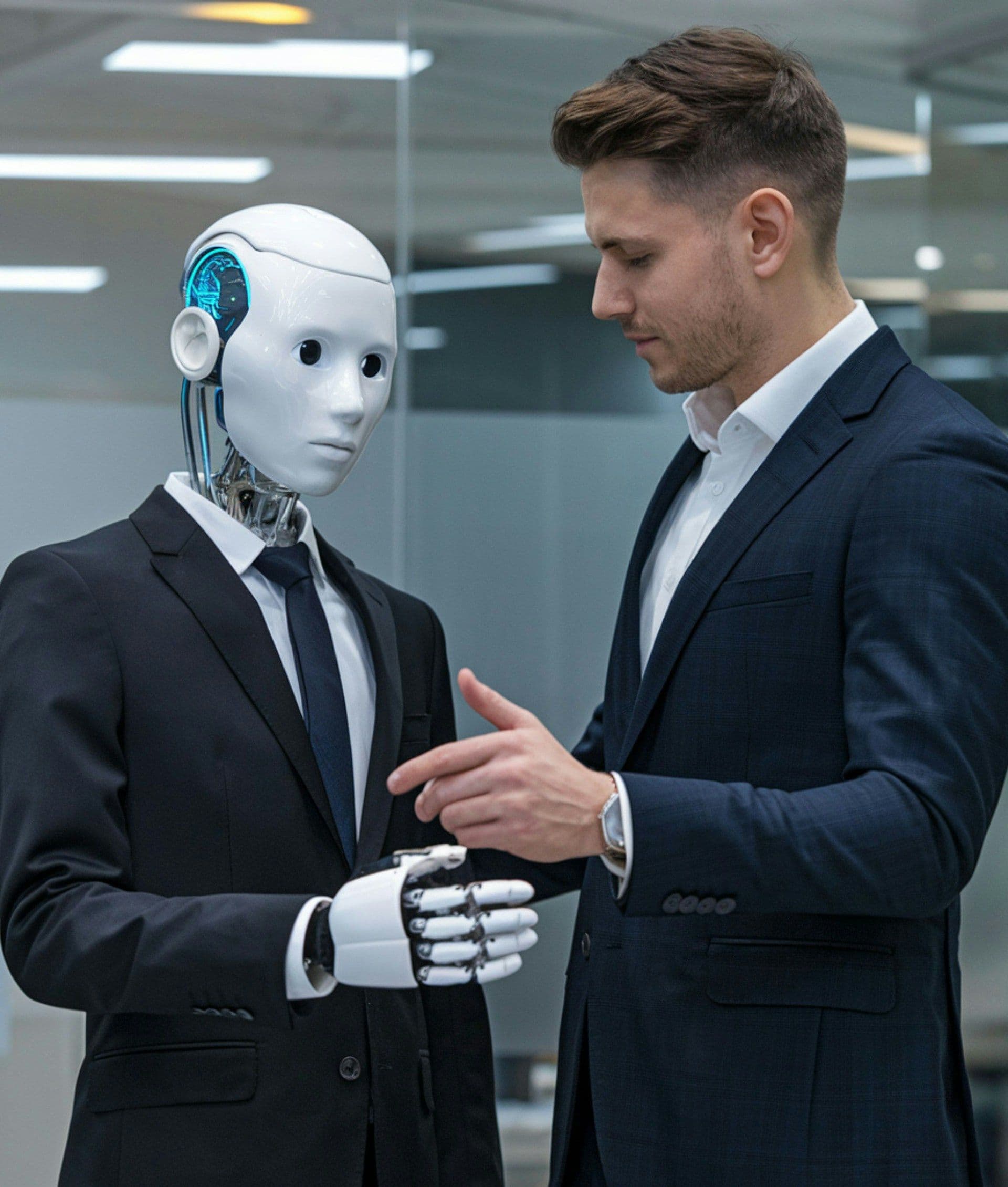
“We are making use of only a small part of our possible mental and physical resources. Develop those resources, and you will find a new world opening up which was previously hidden.”
— William James, The Energies of Men (1907)
AI can now write our emails, analyze our data, generate designs, and even reason through complex problems. What it cannot do is tell us what happens when we stop practicing those skills ourselves. In the race for speed and convenience, we may be trading something far more valuable than time: human intelligence.
We stand at the precipice of a technological revolution. Artificial Intelligence—from eloquent large language models to powerful analytical engines—promises to reshape every industry by automating the tedious and amplifying human capability. The allure is undeniable: let the machine draft the report, write the code, analyze the dataset, design the graphic.
But in our rush to offload cognitive effort, we risk a quieter, more insidious form of self-sabotage: allowing our most human asset—deep understanding and active cognition to atrophy from disuse.
This is not a Luddite rejection of progress. AI is a phenomenal tool and a genuine catalyst for innovation. The danger lies not in using it, but in misusing it, in surrendering understanding for speed, and mastery for what we loosely call “efficiency.”
The Dependency Trap: When the "How" Becomes a Mystery
As a full-stack web developer, I often use YouTube to benchmark my own progress, to see whether I’m months or years behind the relentless technology curve. Recently, I came across a developer who “vibe-coded” an entire application using AI tools, yet had no idea how to fix it when something broke.
The code worked. Until it didn’t.
That is not a relaxing place to be as a developer. When a single error can render an application unusable, ignorance of the underlying system isn’t freedom—it’s fragility. What happens when software is deployed but effectively unfixable? Is that fair to users, or even acceptable for systems we depend on?
Fundamentals are not academic formalities; they are mental models. They allow us to reason, adapt, and critically evaluate AI-generated output. Without them, we lose the ability to question. We become dependent on machine logic we cannot fully interpret, unable to recognize errors, biases, or hallucinations because we lack an independent frame of reference.
As Sam Altman has said, “Figuring out what questions to ask will be more important than figuring out the answer.”
But that assumes we still know enough to recognize when a question needs to be asked. The pool of persons with that ability needs to be filled to the brim and not sparsely populated.
The Atrophy of Judgment and Critical Thinking
“AI makes predictions based on data patterns but can’t question whether patterns are right” – Frank Niranjan (AI and You – Building the future Together)
Over-reliance on AI for creative, analytical or whatever work—writing, design, ideation—risks homogenizing culture. When everyone draws from the same generative models, originality flattens. We begin to recognize patterns not because they are timeless, but because they are statistically likely.
Creativity becomes efficient, but less alive and that holds true across many sectors.
Our brains are like muscles. The act of struggling with a problem, wrestling with data, and forging a path through mental friction is what strengthens our analytical and critical thinking "muscles." If AI always provides the pre-packaged path, that neural pathway never gets built. We create a generation of brilliant "supervisors" of intelligence, whose own intelligence has gone dormant from lack of rigorous exercise. The learning muscle will lose all memory and become a version of ROM instead of a 1GB SSD.
The Practical Consequences: Brittleness and Lack of Resilience
Systems built entirely atop AI layers are brittle. When tools fail, encounter edge cases, or are unavailable, the human operator is left stranded—without the foundational skills required to proceed. This introduces operational risk not just at an individual level, but across organizations and industries.
Innovation suffers as well. True breakthroughs often come from challenging assumptions and reframing problems. Without a grasp of fundamentals, there is nothing to challenge—only iteration within an existing paradigm.
A Call for Conscious Symbiosis, Not Passive Dependence
The solution is not rejection, but intention. AI should be a collaborator, not a crutch.
- Reframing how AI is used. Instead of introducing AI on the world stage as a “tool” to fix everything, highlight its flaws and drawbacks.
- Maintain a "Fundamentals First" Rule. Never use AI to perform a task you fundamentally do not understand. Use its output as a learning tool. Ask: "Why did it suggest this? What principle is it applying?"
- Regularly Exercise Your Brain. Deliberately engage in work without AI assistance. Solve the problem yourself first, then see how AI approaches it. The comparison is where deep learning happens.
- Become a Master Editor and Critic. Shift your skill set toward rigorously auditing, refining, and contextualizing AI output. Your value lies in your human judgment, ethics, and taste.
The great promise of AI was never to make humans obsolete, but to elevate us from the mechanistic to the truly human—the strategic, the creative, the empathetic, and the wise. But that elevation is not automatic. It requires a deliberate choice: to use the tool to build a stronger mind, not a dormant one.
Let’s not trade the profound satisfaction of mastery and the spark of original thought for the quiet, effortless decay of our own potential. The future belongs not to those who let AI do all the work, but to those who use it to do better, more human work than ever before.
The ultimate intelligence we need to cultivate is the wisdom to know what we must never stop cultivating in ourselves.
Next step
If reporting still lives in exports and spreadsheets, we can replace that
We build dashboards and pipelines that stay current without a weekly fire drill.

Author: Damion D Wilson
Admin - opsedsolutions.com